A multinational developer wants to blanket this rural heritage landscape with one of the largest battery installations in the southern hemisphere. Here is what that would mean for the people, wildlife, and history of Uriarra Valley.
Read the Impacts ↓The proposal is framed as clean, green infrastructure. The reality for those who live here — and for the heritage values the valley is protected for — is very different. Learn about the Flat Rock proposal
A 520MW BESS runs its cooling and power systems around the clock. The valley's defining silence — the reason people and wildlife treasure it — never comes back.
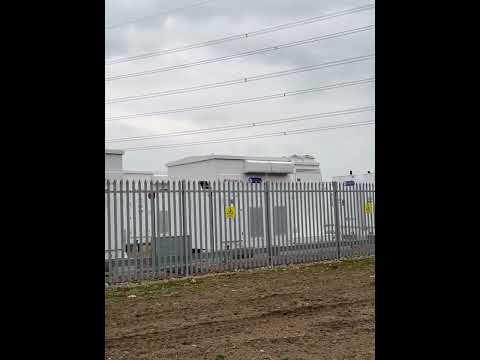
Example of BESS Noise Pollution
Security lighting, perimeter floodlights and switching stations would wash out the night sky over a valley that currently enjoys true darkness.
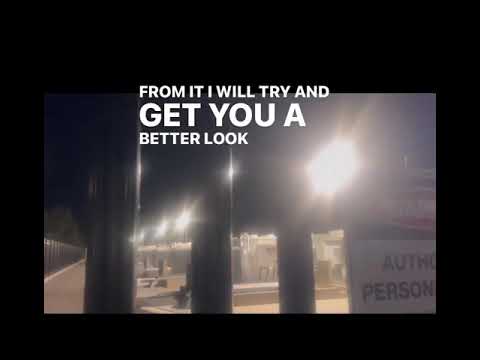
Example of Light Pollution
Shipping-container-scale batteries, substations and transmission hardware stacked across paddocks that have been grazed since the 1830s.
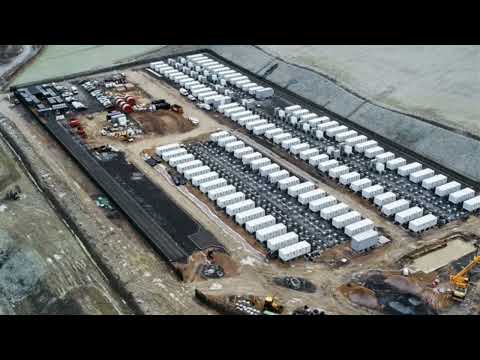
Example of Visual Impact
Lithium batteries in a designated bushfire-prone area. If one fails, toxic smoke and contaminated runoff threaten the Murrumbidgee catchment.
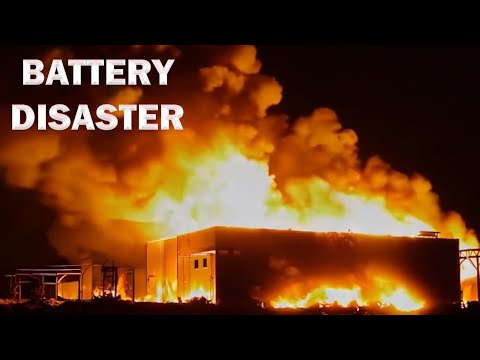
Example of Fire & Contamination
Three years of trucks, cranes, dust and detours on Uriarra Road — disrupting cycling, riding, swimming, fishing and camping across the valley.
Uriarra Valley's soundscape today is wind in the gums, birdsong and distant stock. A BESS facility of this scale brings something entirely different: hundreds of industrial cooling fans, transformers and inverters running 24 hours a day, 365 days a year.
Industrial facilities demand industrial lighting: perimeter floodlights, security lighting on masts, switching-station lighting, all night, every night. The valley currently sits under some of the darkest skies in the ACT region.
The Uriarra Valley is a working rural landscape with continuity back to the 1830s — stone homesteads, grazing paddocks, tree-lined roads. The BESS would insert an industrial scale and character that is fundamentally incompatible with those values.
The site sits in a high bushfire-risk area — the valley was at the epicentre of the 2003 Canberra firestorm. Lithium-ion battery installations add a new and unforgiving hazard to that landscape.
Before a single battery stores a single watt, the valley faces three full years of heavy construction: hundreds of trucks a day on Uriarra Road, cranes, graders, dust and noise — right through the heart of a quiet rural community and the recreation country that surrounds it.
The battery industry says "it won't happen here." It has happened everywhere else — from Korea to Germany to Arizona to Australia. This is the global track record the developer doesn't put in its brochures.
A national cluster of more than two dozen battery-storage fires forced the government to suspend much of its ESS fleet. Investigators blamed a system-wide failure: faulty surge protection, dust and humidity in cheap enclosures, and batteries pushed hard without safety margins.
A single failed cell at an Arizona Public Service facility went into thermal runaway. Hours later, flammable off-gas built up inside the sealed container — and exploded when firefighters opened the door, injuring eight, several critically.
A solar-storage battery station in southern Beijing exploded during charging, killing two firefighters and hospitalising a third. The blast tore through a rooftop installation in a dense urban area.
Australia's own 300MW "Big Battery" at Geelong caught fire during commissioning — before it had even delivered a watt to the grid. A Tesla Megapack was consumed and the fire spread to a neighbouring unit, burning for days.
Overheating at the world's most powerful grid battery damaged racks and melted wiring in the repurposed turbine hall. An early warning of what the same building would do three years later.
A short circuit in the power conversion system — not the cells themselves — started a battery fire in a US state-of-the-art facility. Even "balance of plant" equipment can be the ignition source.
A Tesla Megapack at PG&E's Elkhorn battery plant next door to Moss Landing caught fire, sending smoke over a coastal community and highways. The same site was ordered to stay offline until 2027 after the 2025 disaster next door.
A battery storage facility on Long Island burned in a residential-adjacent area, triggering a multi-day emergency response and renewed calls for setbacks from homes.
A home battery storage system in northern Germany exploded with the force reported as heard kilometres away, destroying the building it sat in. Germany has since accelerated international standards for first-responder safety.
One of the world's largest standalone battery plants caught fire, burning batteries for days and requiring extended multi-agency response just to keep it contained.
A lithium battery manufacturing plant in Hwaseong exploded and burned, killing more than 20 workers — most of them trapped by the speed of the fire. A brutal demonstration of how fast lithium fires move.
The defining BESS disaster. A fire tore through the 300MW Vistra facility holding ~100,000 lithium-ion modules, burned roughly 80% of the affected capacity, and forced the evacuation of 1,200 residents. Toxic smoke drifted for days; the sprinkler system failed so badly it had to be switched off mid-fire. EPA-led cleanup is still ongoing.
Twenty months after the big fire, roughly 1,200 still-charged battery modules waiting for demolition ignited on their own, triggering another shelter-in-place order for the same community. Damaged lithium batteries keep burning — even after the "fire is out."
Email the ACT Ministers deciding the fate of the Uriarra Valley with your concerns. One email from you counts — a hundred from the community counts more.
Why object? Tell them what this development means for the valley: